
Showing posts with label mental health therapist. Show all posts
Showing posts with label mental health therapist. Show all posts
Tuesday, 15 December 2020
Refining Mental Health | Somatic & Dialectical Behaviour Therapy
Refinning mental health
 Mental Health today is a very expansive concept and there are a plethora of ways to work with the mind ranging from psychotherapy to mantra meditation to herbs to mindfulness ,pranayama and yoga to exercise to nutrition to hypnosis to entheogens to reiki to quantum healing to dance therapy to sound therapy etc etc etc…. the list goes on.
Its therefore no surprise if we get overwhelmed and fall into something called decision fatigue where we don’t know the best way forward for us. Also within the list above there are many nuances and sub types of all the methods listed….for instance in therapy we have somatic therapy, dialectical behaviour therapy, psychoanalysis, Hakomi…under yoga we have power yoga, Ashtanga yoga, Iyengar yoga, the choices and types are ever growing . . .there are thousands of medicinal herbs and substances that are being marketed from açai berries to moringa powder as well as numerous schools and modalities of meditation from Vipasana to Kala chakra empowerments . . . . so what’s the best thing for us?
Often taking care of the Self requires a multifactorial, holistic approach which stimulates us on a mental, emotional, physical and spiritual levels. So one would need to work with oneself in a balanced and disciplined way that is intelligible to one’s own psychophysiological constitution. What I mean is the right type of exercise, the right type of meditation, right type of food, right amount of rest etc. for oneself . . Otherwise our efforts are counterproductive and we have limited results. As we say in Ayurveda that one can eat like a king, but digest like a beggar if one’s gut flora or digestive fire, known as Agni is not working properly. What is meant by this is that one can avail of the best groceries, trainers, yoga studios but if its the wrong type of practise for us in whatever field, we will not be able to contain it in our bodymind and will not receive the benefits from it. So if a very skinny person decided to do an intense cardiovascular work out then it would be extremely destructive for their nervous, endocrine and immune systems . . . similarly if someone who intellectualises and rationalises defensively undertook solely CBT they would not learn to recognise, feel and work with their emotions in the body. Hence it is extremely important to see what suits us . . . so this leads us to exploring our Prakriti or constitution. I now mandatorily conduct Prakriti analyses with my clients in order to complement their therapeutic process by giving them the sui generis nutritional, lifestyle and self care advise that is suited to them.
Mental Health today is a very expansive concept and there are a plethora of ways to work with the mind ranging from psychotherapy to mantra meditation to herbs to mindfulness ,pranayama and yoga to exercise to nutrition to hypnosis to entheogens to reiki to quantum healing to dance therapy to sound therapy etc etc etc…. the list goes on.
Its therefore no surprise if we get overwhelmed and fall into something called decision fatigue where we don’t know the best way forward for us. Also within the list above there are many nuances and sub types of all the methods listed….for instance in therapy we have somatic therapy, dialectical behaviour therapy, psychoanalysis, Hakomi…under yoga we have power yoga, Ashtanga yoga, Iyengar yoga, the choices and types are ever growing . . .there are thousands of medicinal herbs and substances that are being marketed from açai berries to moringa powder as well as numerous schools and modalities of meditation from Vipasana to Kala chakra empowerments . . . . so what’s the best thing for us?
Often taking care of the Self requires a multifactorial, holistic approach which stimulates us on a mental, emotional, physical and spiritual levels. So one would need to work with oneself in a balanced and disciplined way that is intelligible to one’s own psychophysiological constitution. What I mean is the right type of exercise, the right type of meditation, right type of food, right amount of rest etc. for oneself . . Otherwise our efforts are counterproductive and we have limited results. As we say in Ayurveda that one can eat like a king, but digest like a beggar if one’s gut flora or digestive fire, known as Agni is not working properly. What is meant by this is that one can avail of the best groceries, trainers, yoga studios but if its the wrong type of practise for us in whatever field, we will not be able to contain it in our bodymind and will not receive the benefits from it. So if a very skinny person decided to do an intense cardiovascular work out then it would be extremely destructive for their nervous, endocrine and immune systems . . . similarly if someone who intellectualises and rationalises defensively undertook solely CBT they would not learn to recognise, feel and work with their emotions in the body. Hence it is extremely important to see what suits us . . . so this leads us to exploring our Prakriti or constitution. I now mandatorily conduct Prakriti analyses with my clients in order to complement their therapeutic process by giving them the sui generis nutritional, lifestyle and self care advise that is suited to them.

Tuesday, 1 December 2020
Understanding my Practice as Bhūta vidya
Understanding my Practice as Bhūta vidya
The blueprint of my psyche-therapeutic practice lies in my interest in the anthropology of consciousness. Initially, as a student of anthropology, I was very impressed with how pre-modern cultures and civilisations always looked at the meanderings of the stars to understand their destinies and observed the seasons of nature to heal their body-minds. Over time, the ancients came to delineate clear patterns in the sky and on the earth that spelled health and illness, fortune and misfortune.
Deeply impressed with the wisdom of the deep past, I can describe my practitioner’s journey from being a young intern at a methadone support clinic in Tenderloin, San Francisco to my present private practice in South Mumbai, as one of wanting to personally create a working therapeutic modality that integrated Western psychology with the Vedic arts of Jyotiṣa and Āyurveda.
I feel Jyotiṣa and Āyurveda have afforded me great depths to expand my psychotherapeutic tool kit to observe bio-energetic patterns: patterns in myself, in my clients, in nature, and in the world around me. Over time, I have come to appreciate that the patterns in a person’s life affect the bio-energetic configurations of their body, mind and consciousness.
The extent to which the patterns in an individual’s life synchronise with the rhythms of nature predicates the scope of their well-being. It has been my observation that for most of us living in an urban environment with trash, noise, overcrowding, and all kinds of pollution, we are most clearly out touch with the natural world and our deepest selves. We are in a subconscious state of eco-trauma, where we are dealing with the brutal pain of witnessing the assault on the biosphere.
Registering the world around us be potentially taken over by COVID-19, environmental degradation and socio-economic injustice imparts a sense of desolation. It might make one self-harm, overeat, overconsume, feel depressed, anxious, stressed, or angry, smoke, drink, take sleeping tablets, browse meaningless websites, flip from one social media platform to another, dissociate on gadgets and subliminally struggle with the latent existential insecurity of falling into the dark abyss of the void.
Whatever we are entertaining in our minds, the likelihood that we will continue to entertain that is very strong, unless we bring awareness to the energetics of what is arising in our body, mind and consciousness. Here, I feel learning Bhūta vidya could be a valuable tool to safeguard oneself from the perils of dis-ease, mentally, physically and spiritually.
Bhūta vidya, then, is about linking one’s personal story to the story of the cosmos by learning to understand oneself as a bioenergetic process that is also an "environmental interaction" (Gendlin). It’s about learning to know how one’s mental and digestive health are interrelated, as is one’s experience of time and space, psyche and spirit, day and night, pain and pleasure, nature and culture. Bhūta vidya is about cultivating an awareness of when we are out of balance and learning the tools to bring us back into harmony. What imbalances one, balances another, and there are no hard and fast rules here. It’s about knowing what’s right for you. Once you understand what idiosyncratically imbalances you, you learn what balances you—what herbs, what foods, what movements, what times, what thoughts, what feelings, what moon phases, what fragrances, what asanas, what pranayamas, what activities, what company, what seasons, what colours . . . and you learn to choose only that which balances you. In this way, life becomes a dance where we are constantly bringing ourselves back to balance when everything around us is trying to imbalance us.
Tuesday, 31 January 2017
Psychologist,Psychiatrist,Psychotherapist and Counsellor
What is Psyche-Therapy
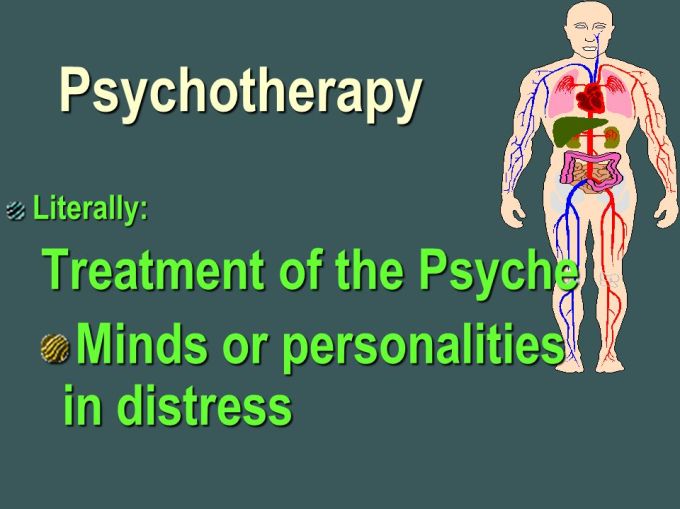
I am often asked why do I call my practice “Psyche-Therapy” as opposed to “Psychotherapy?”
Psyche-Therapy is a particular orientation some practitioners of mental
health have when they work with their clients, where attention is given
to the whole person instead of being isolated or reduced to a DSM-V
diagnosis.
The word Psyche-Therapy comes from two ancient Greek terms “Psyche” and “Therapeia”
Psyche: is an ancient Greek term which can be appreciated as soul, spirit, life force . . . or more expansively the animating principle of the kosmos. Psyche in modern psychology encompasses both the mind and the brain and the conscious and unconscious aspects of the Self.
The term Psyche has specific meaning in the Greek mythological and symbolic context where it is often synonym for the human soul. In the myth (see links below) Psyche is a human princess who falls in love with a divine God, Eros. The legend is about love, enchantment, betrayal, heartbreak, pain, reunion and everlasting happiness, pretty much the existential journey of life. Metaphorical it is about the soul’s love affair with the Divine and the hardship the soul goes through to realize that union.
http://www.greekmyths-greekmythology.com/psyche-and-eros-myth/
or
http://www.greeka.com/greece-myths/eros-psyche.htm
Therapeia: is another ancient Greek term that connotes healing, treatment, curing . . . Therapy, the modern English term is etymologically derived from Therapeia and encompasses vast fields such as pharmacological therapy to physiotherapy. Therapy then is a generic word that simply underscores a mode or method of working with a field to help catalyze results within the individual that are rejuvenating.
So Psyche + Therapy = Psyche-Therapy= a holistic therapeutic facilitation engaging the myriad conscious and unconscious layers of the Self.
Bookmark the permalink.
The word Psyche-Therapy comes from two ancient Greek terms “Psyche” and “Therapeia”
Psyche: is an ancient Greek term which can be appreciated as soul, spirit, life force . . . or more expansively the animating principle of the kosmos. Psyche in modern psychology encompasses both the mind and the brain and the conscious and unconscious aspects of the Self.
The term Psyche has specific meaning in the Greek mythological and symbolic context where it is often synonym for the human soul. In the myth (see links below) Psyche is a human princess who falls in love with a divine God, Eros. The legend is about love, enchantment, betrayal, heartbreak, pain, reunion and everlasting happiness, pretty much the existential journey of life. Metaphorical it is about the soul’s love affair with the Divine and the hardship the soul goes through to realize that union.
http://www.greekmyths-greekmythology.com/psyche-and-eros-myth/
or
http://www.greeka.com/greece-myths/eros-psyche.htm
Therapeia: is another ancient Greek term that connotes healing, treatment, curing . . . Therapy, the modern English term is etymologically derived from Therapeia and encompasses vast fields such as pharmacological therapy to physiotherapy. Therapy then is a generic word that simply underscores a mode or method of working with a field to help catalyze results within the individual that are rejuvenating.
So Psyche + Therapy = Psyche-Therapy= a holistic therapeutic facilitation engaging the myriad conscious and unconscious layers of the Self.
Bookmark the permalink.
Subscribe to:
Posts (Atom)